ILLINOIS CONVEYOR SOLUTIONS
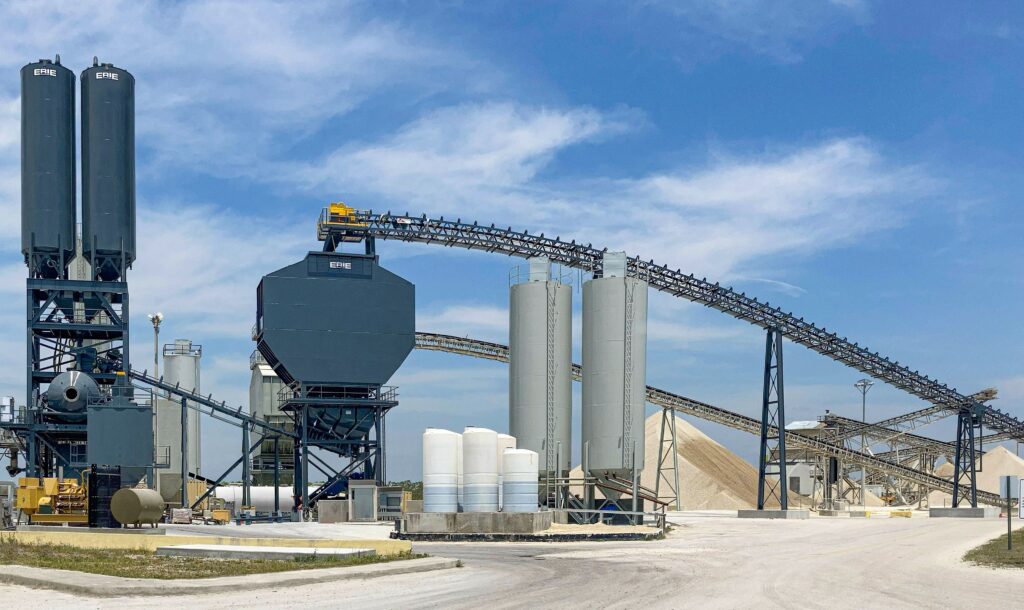
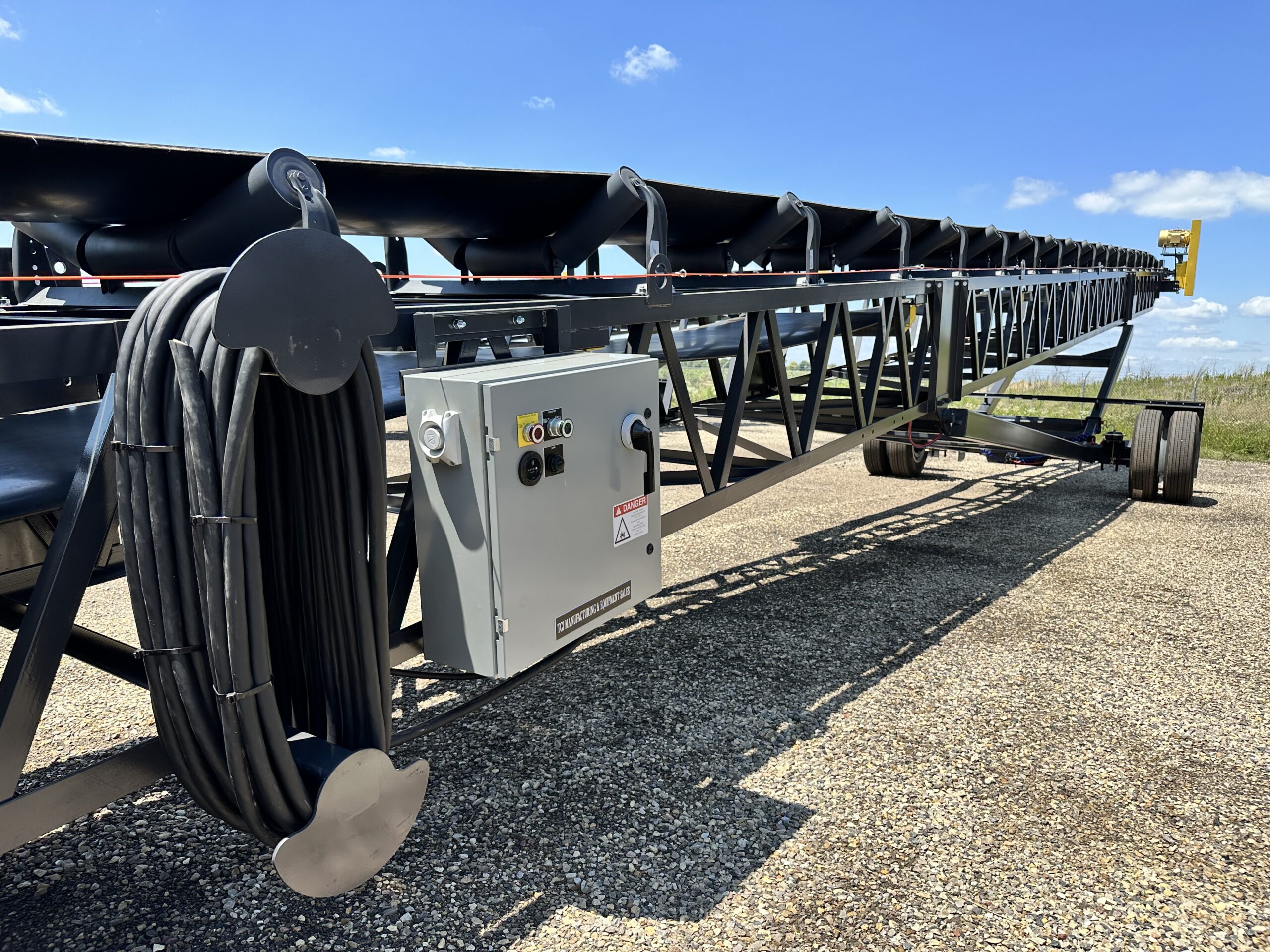
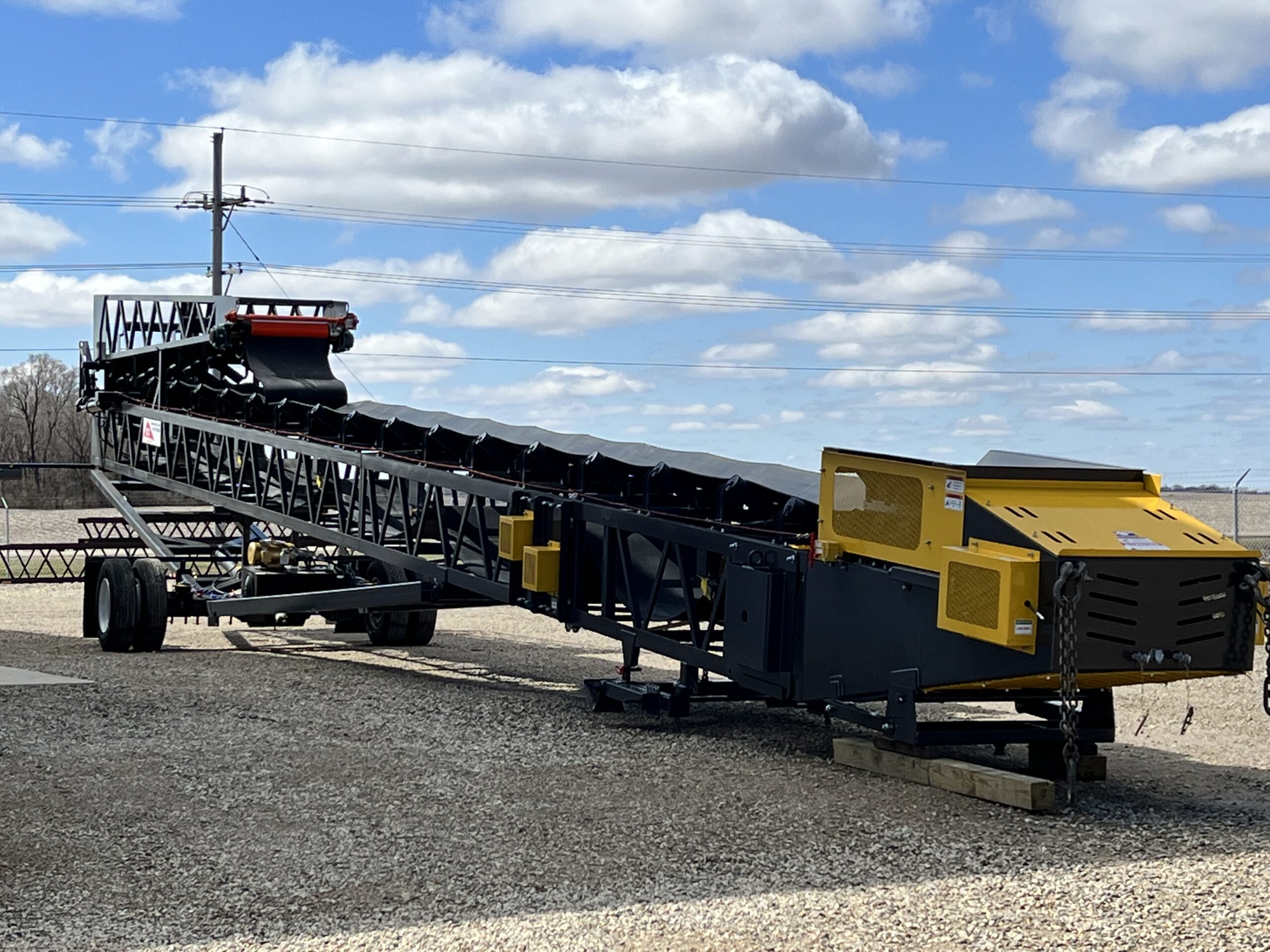
A quarry’s output is only as fast as its slowest conveyor. For Illinois aggregate producers, sand and gravel operations, and material suppliers, that usually means the belt system connecting crusher to screen, or screen to stockpile, is doing more to determine daily tonnage than the crusher itself gets credit for. TCI Manufacturing designs and builds aggregate conveyor systems out of its Illinois facility, purpose-built for aggregate handling rather than repurposed from grain or general industrial conveying lines.

Comprehensive Solutions for Any Industry
Mining operations, aggregate producers, recycling facilities, and grain handlers across Illinois all move bulk material differently, and TCI’s aggregate conveyor systems for Illinois operators reflect that. A single crusher-and-screen setup and a multi-stage processing plant need different equipment, not the same conveyor sold at two different lengths.
Built for Flexibility and Efficiency
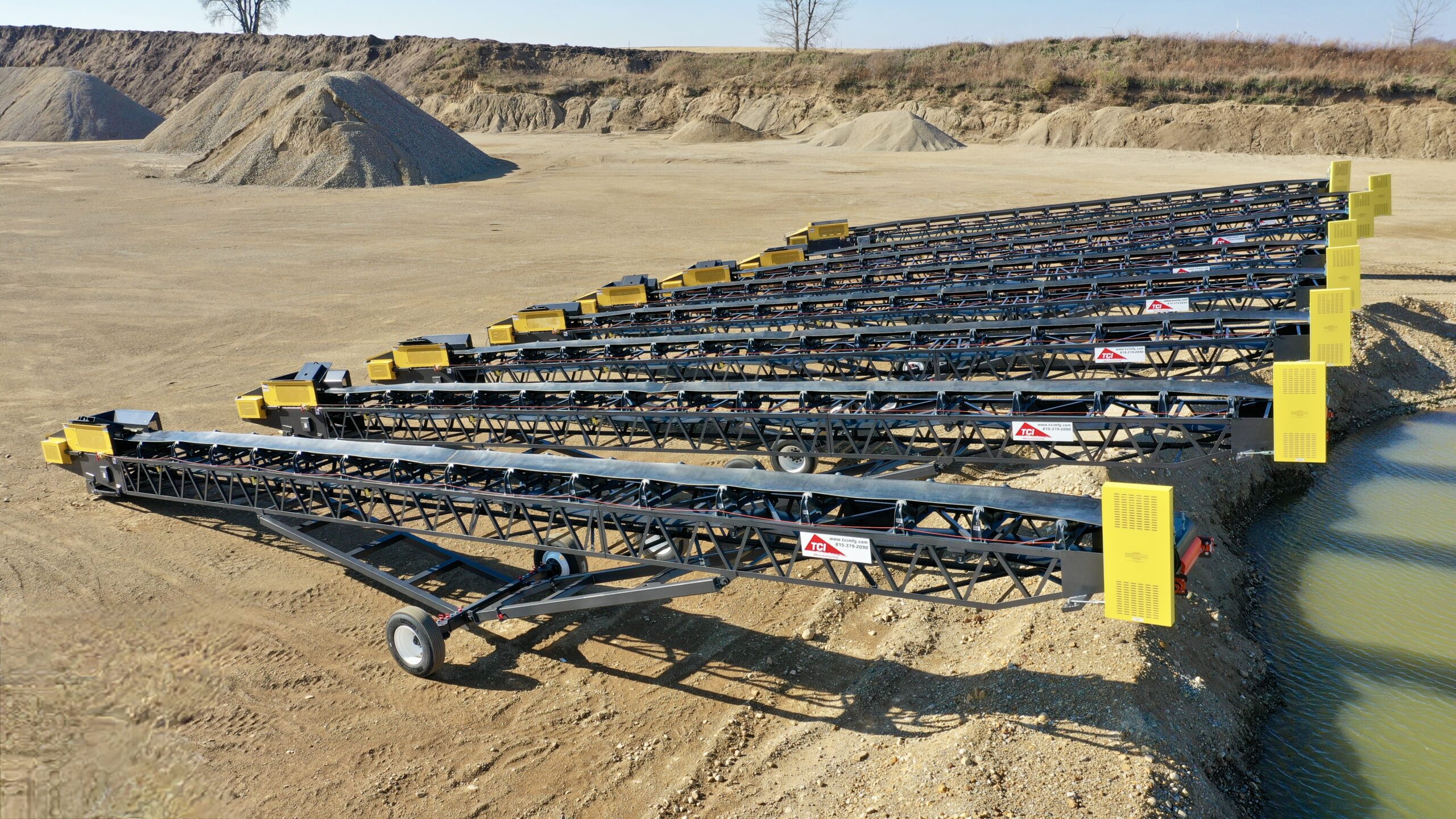
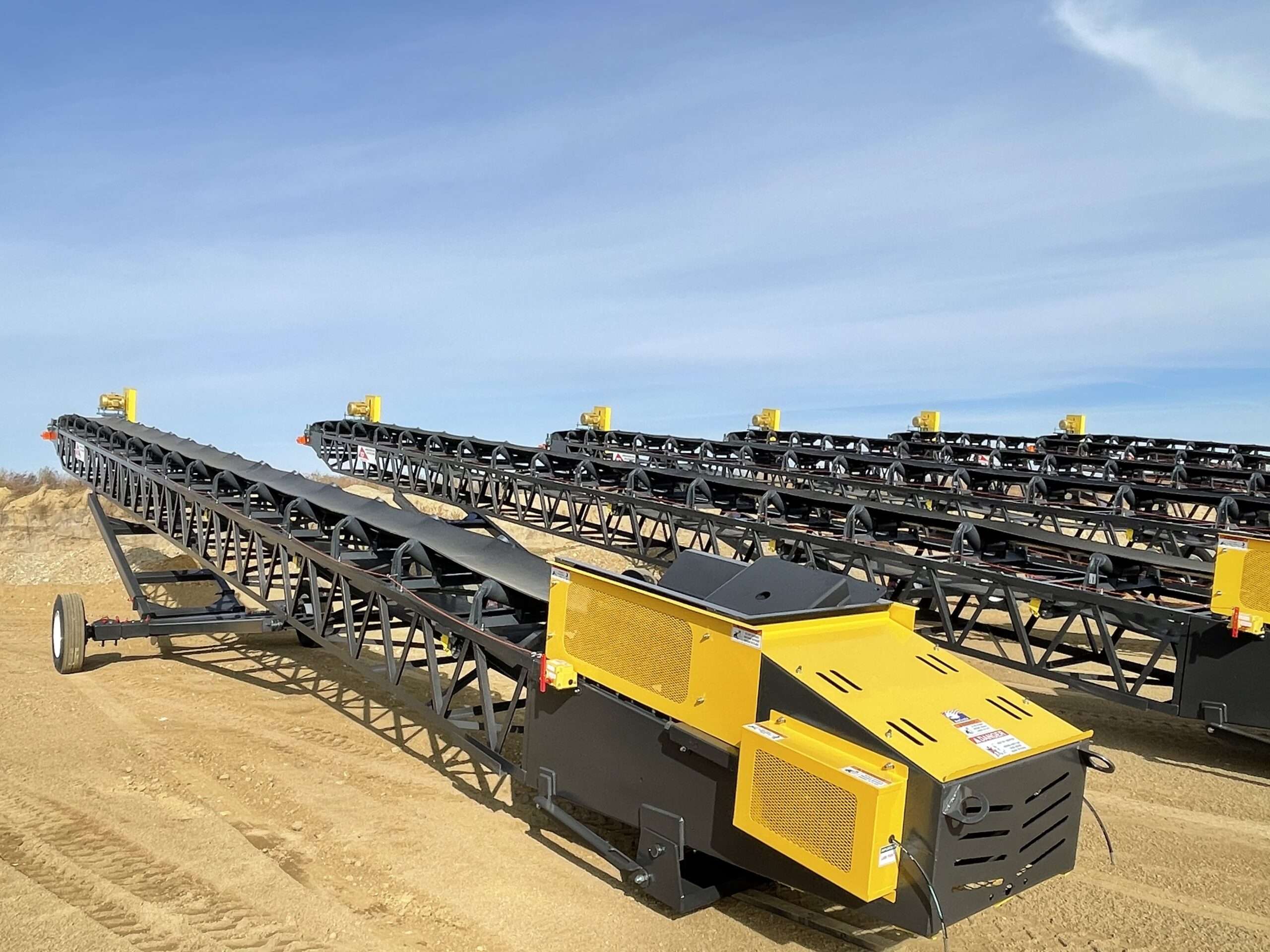
Site layouts change. Stockpile locations shift with permit boundaries, seasonal demand, and available land. TCI builds both portable units that move with the site and stationary systems for plants that run the same footprint year after year, so the equipment adapts to the operation instead of the operation working around fixed equipment.
Reliable Performance in Tough Conditions
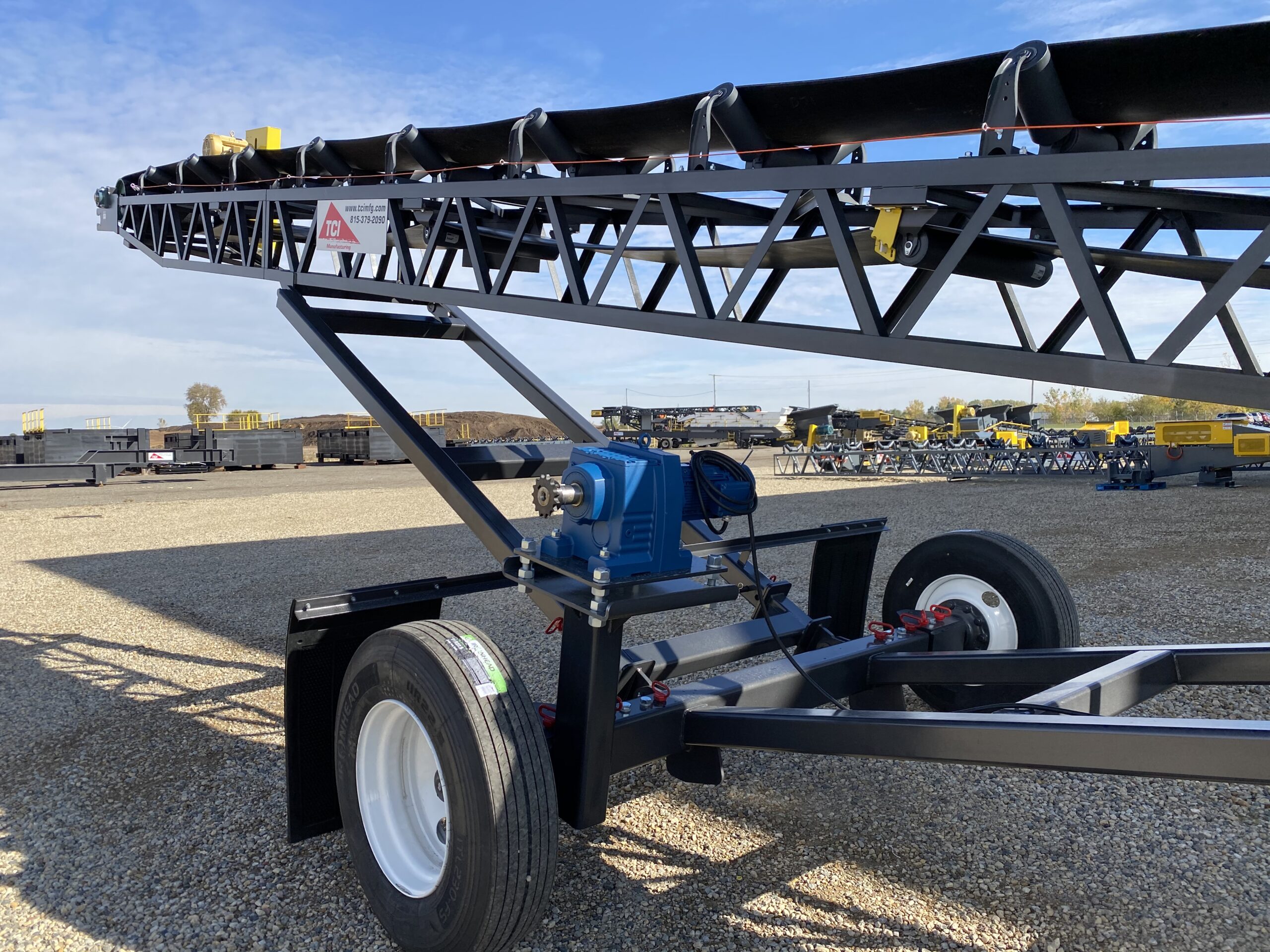
Crushed stone and sand are abrasive by nature, and an Illinois winter adds temperature extremes on top of that wear. TCI’s frames use deep truss or channel construction specifically to resist the flexing and fatigue that heavy, constant material flow causes over years of operation, not just the first season.
RADIAL STACKING CONVEYORS
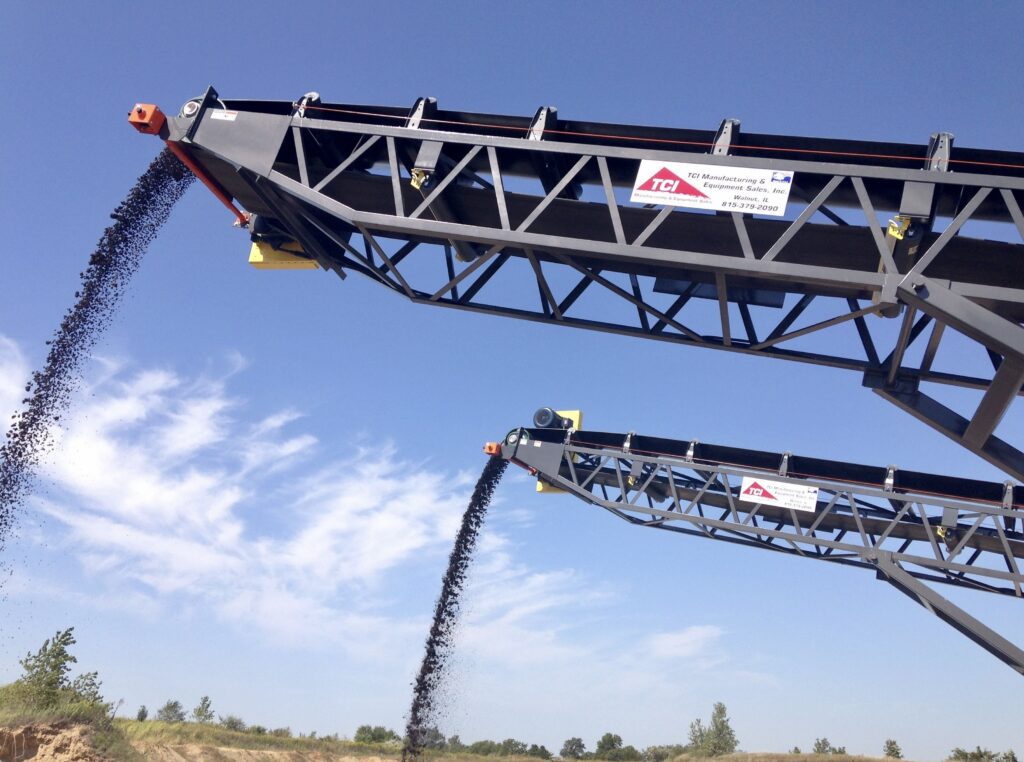
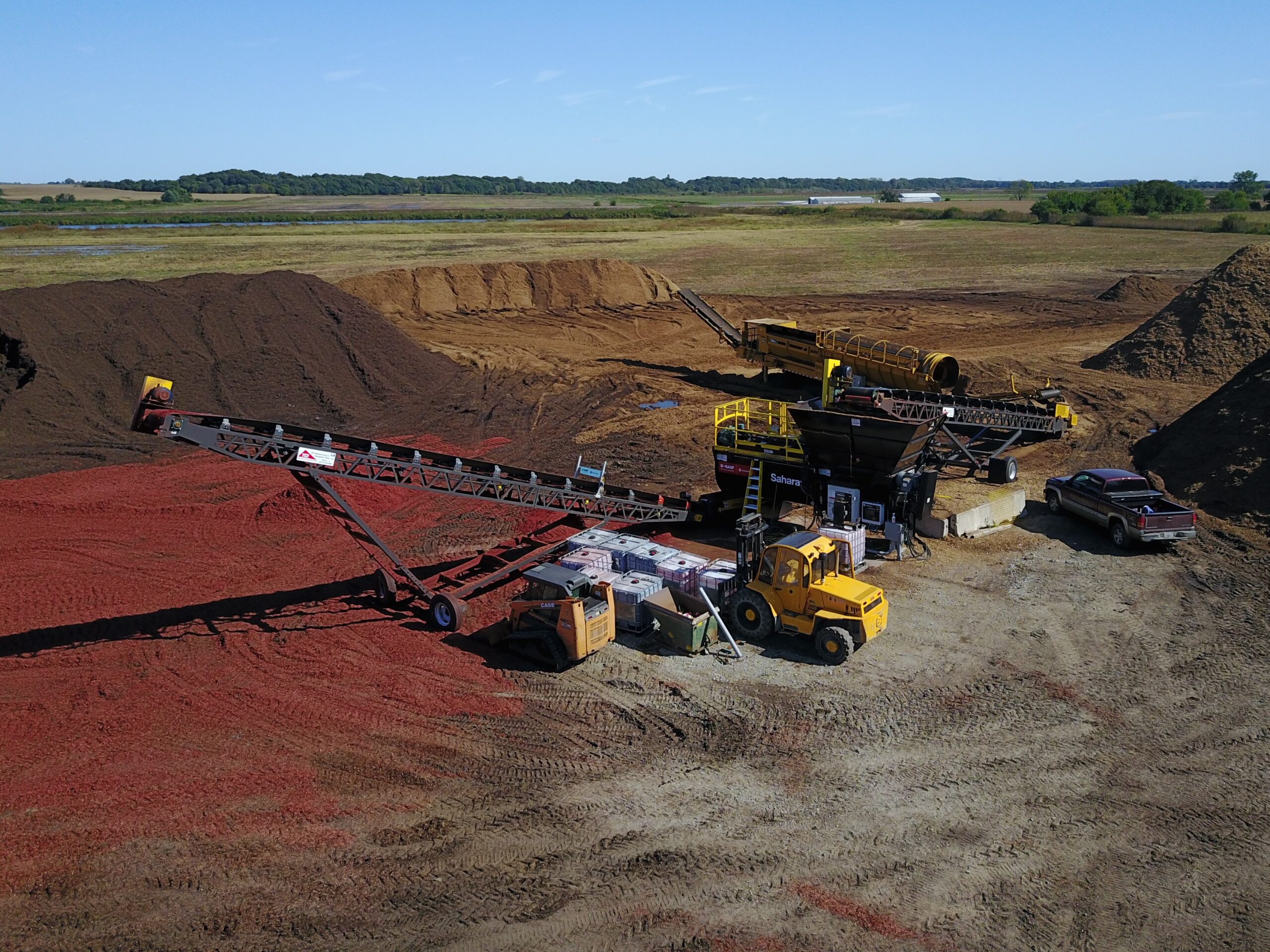
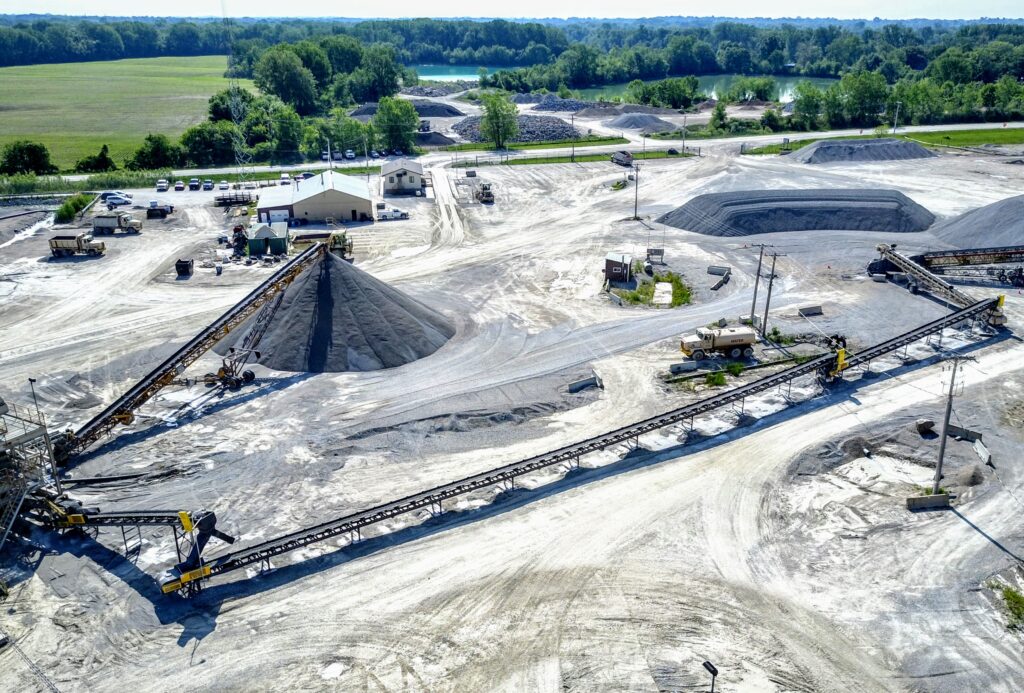
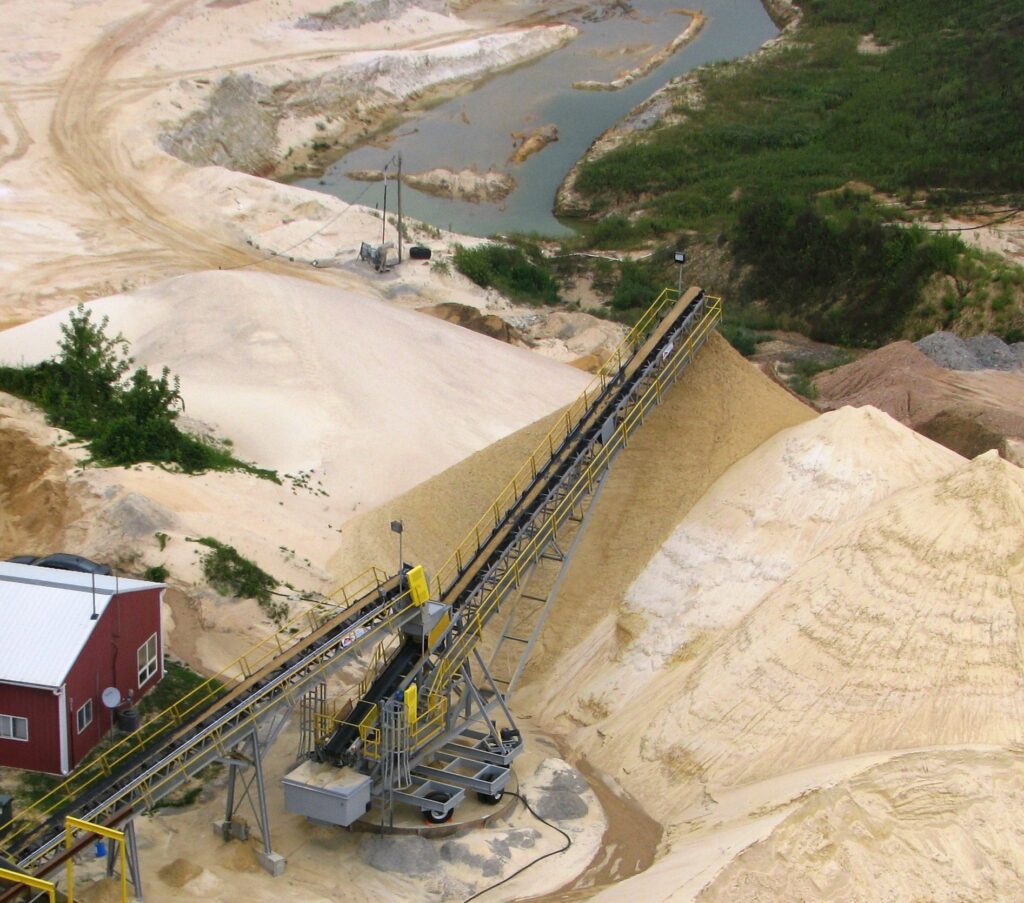
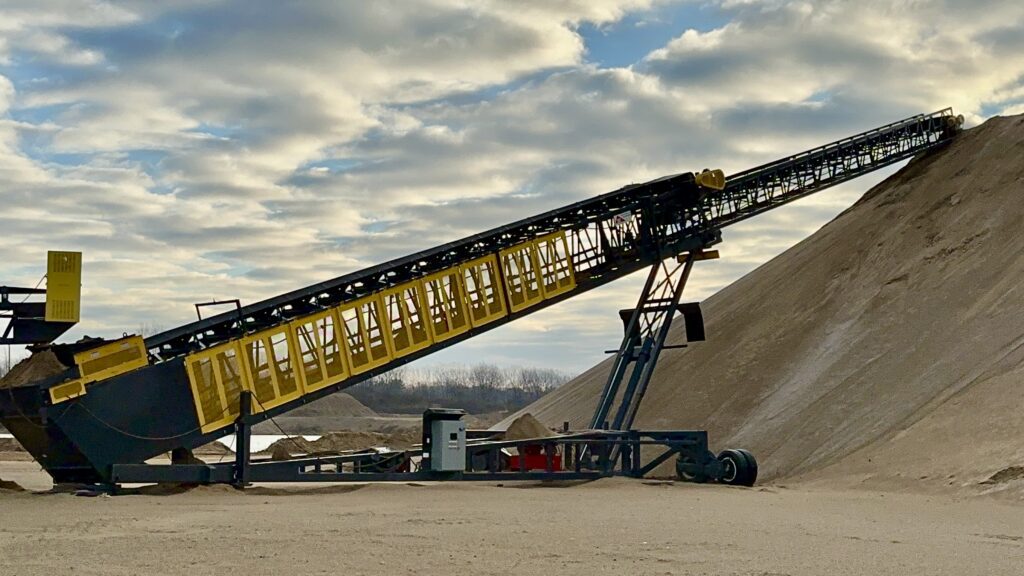
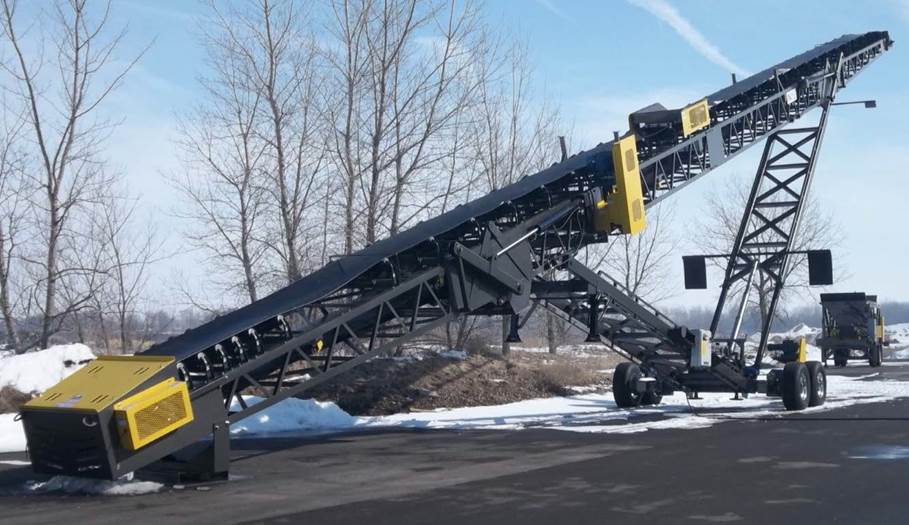
Radial stacking conveyors pivot to build and reshape a stockpile without a loader running back and forth to redistribute material. As part of TCI’s broader line of aggregate conveyor systems in Illinois, these units come in both portable and stationary versions, so a site can choose between one that relocates as stockpile needs change or one that stays fixed as part of a permanent processing line.
TRANSFER CONVEYORS
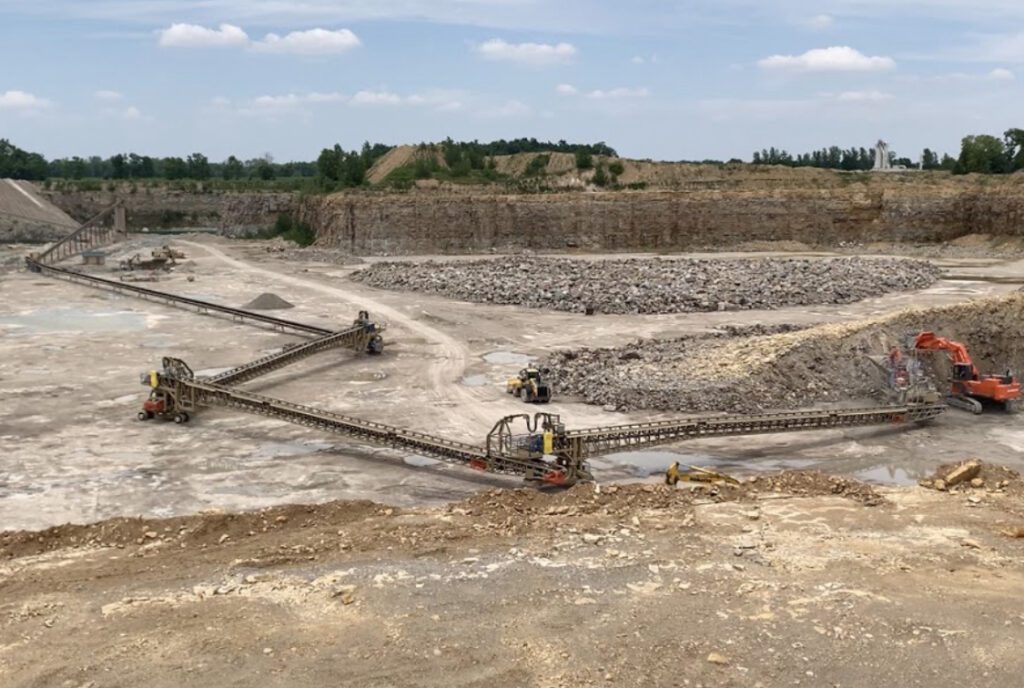
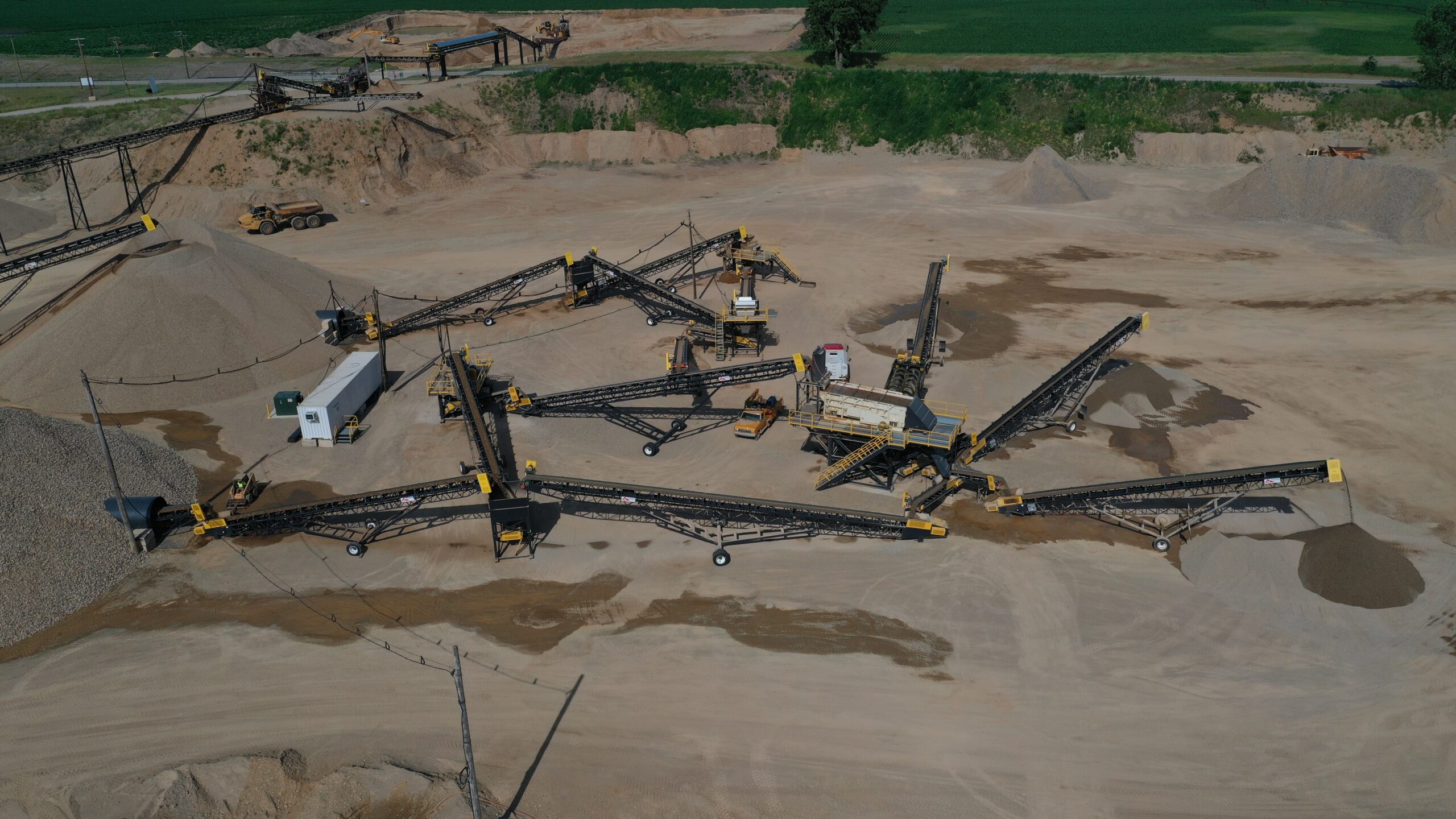
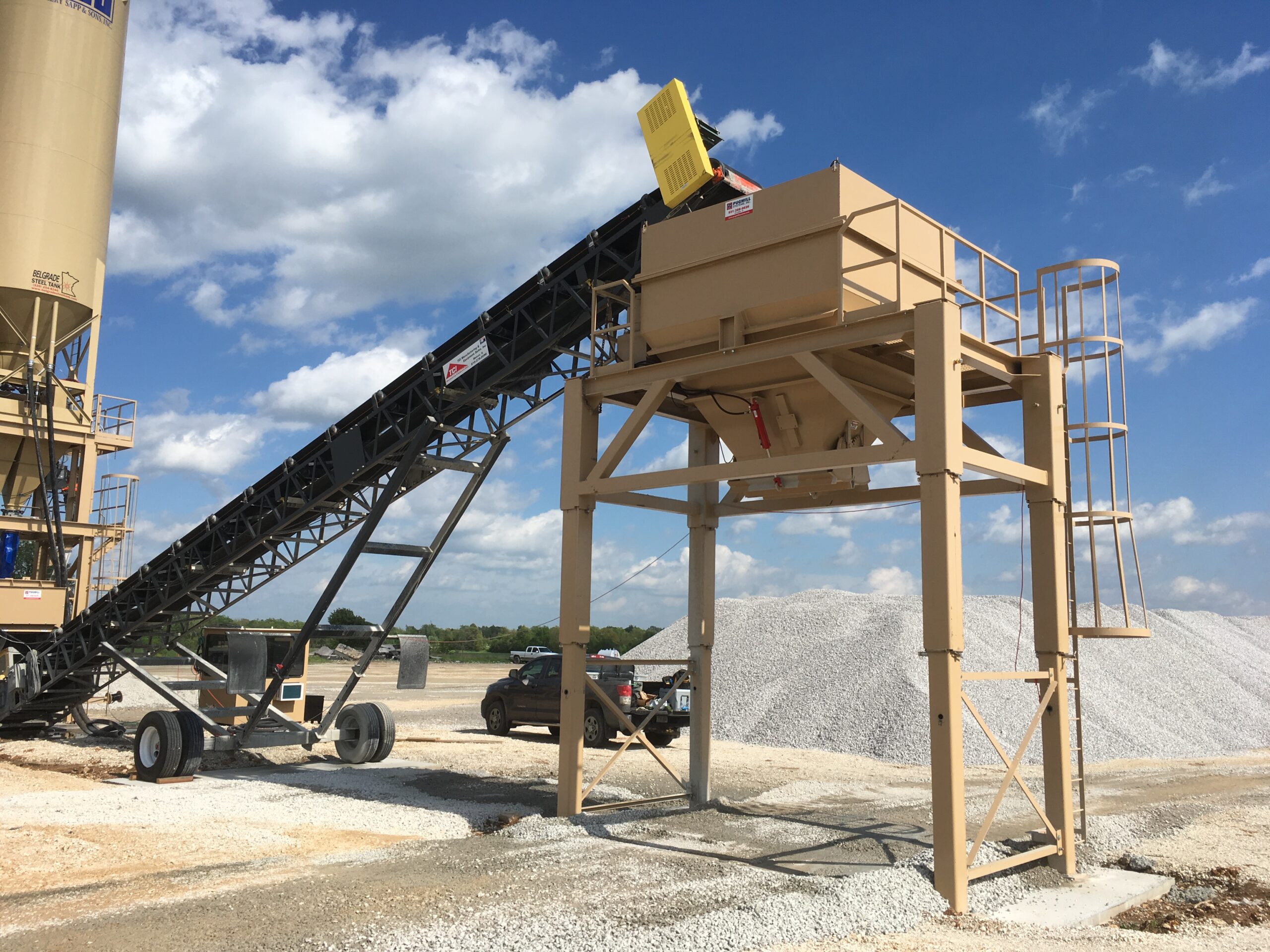
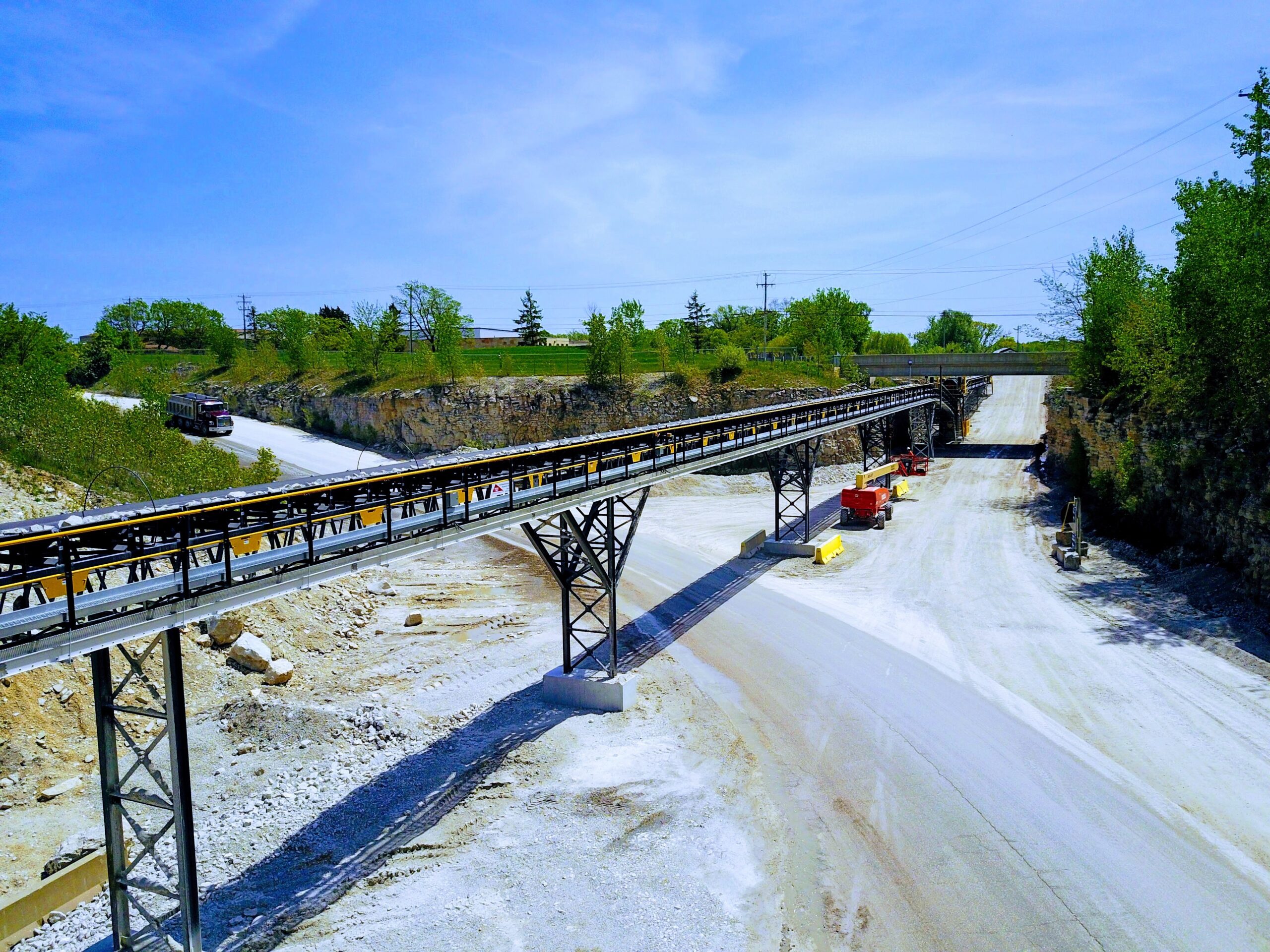
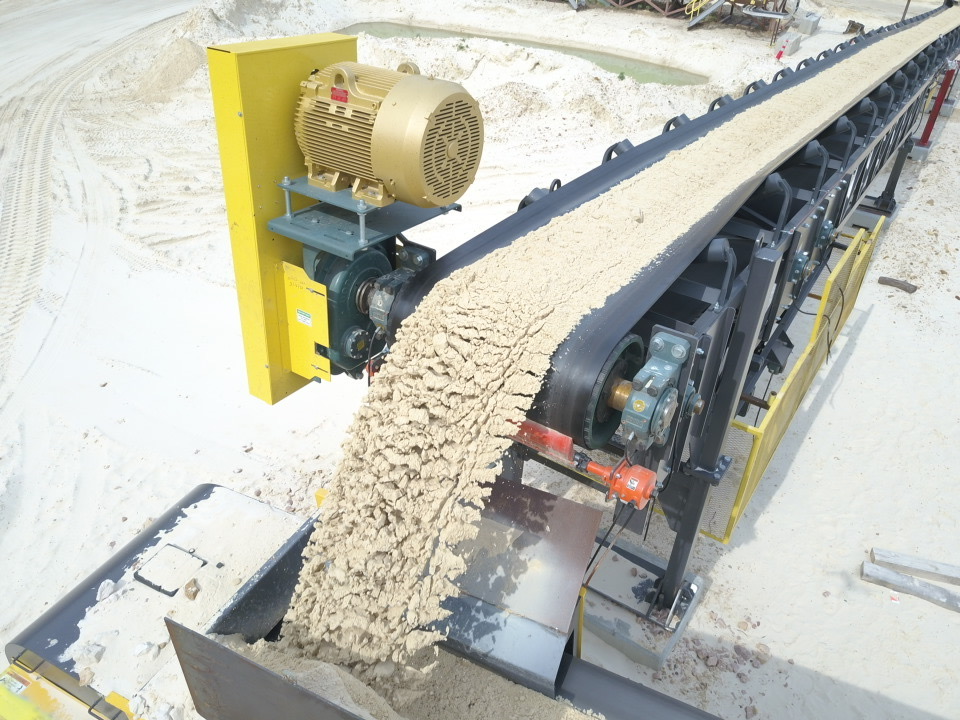
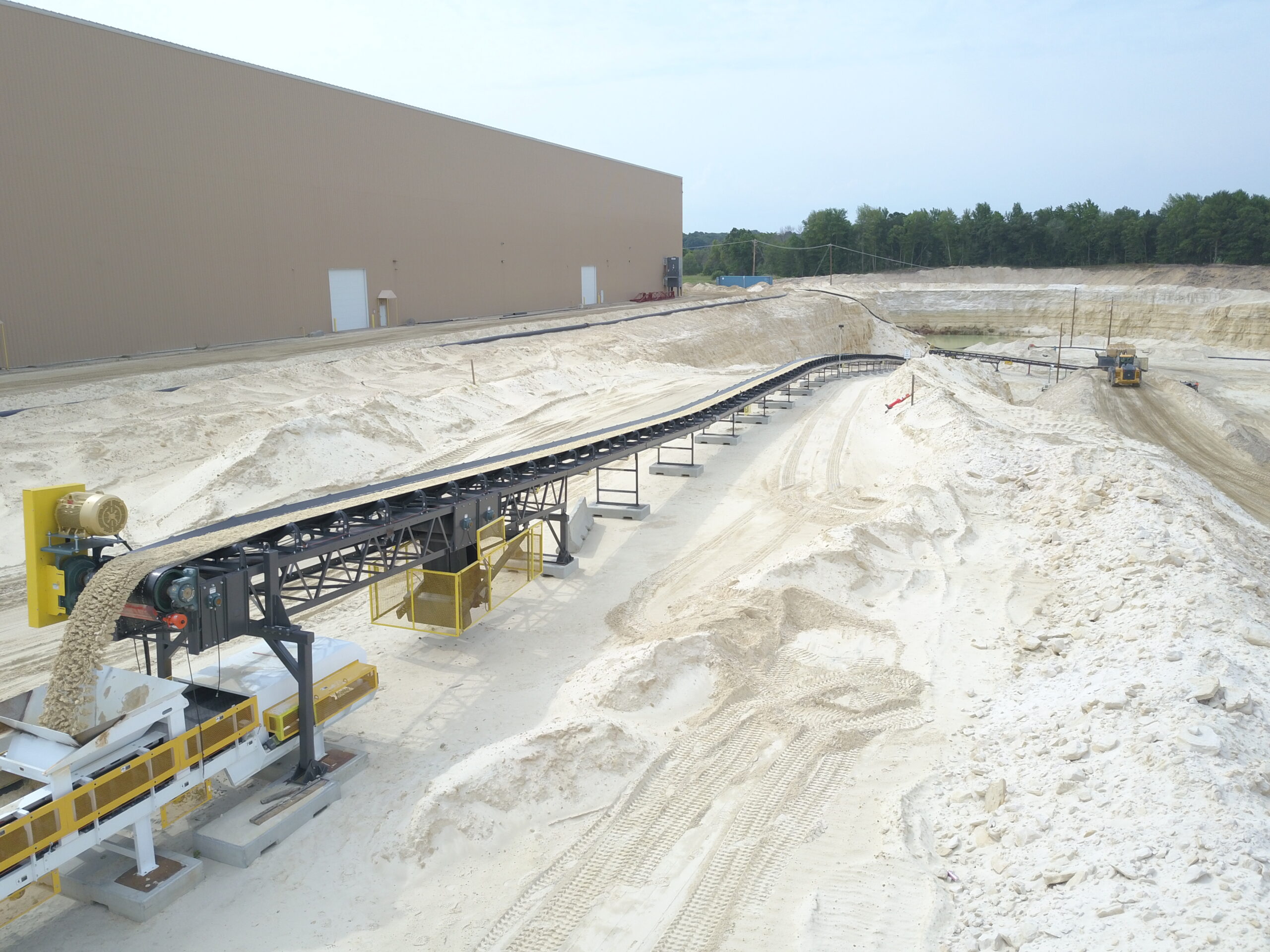
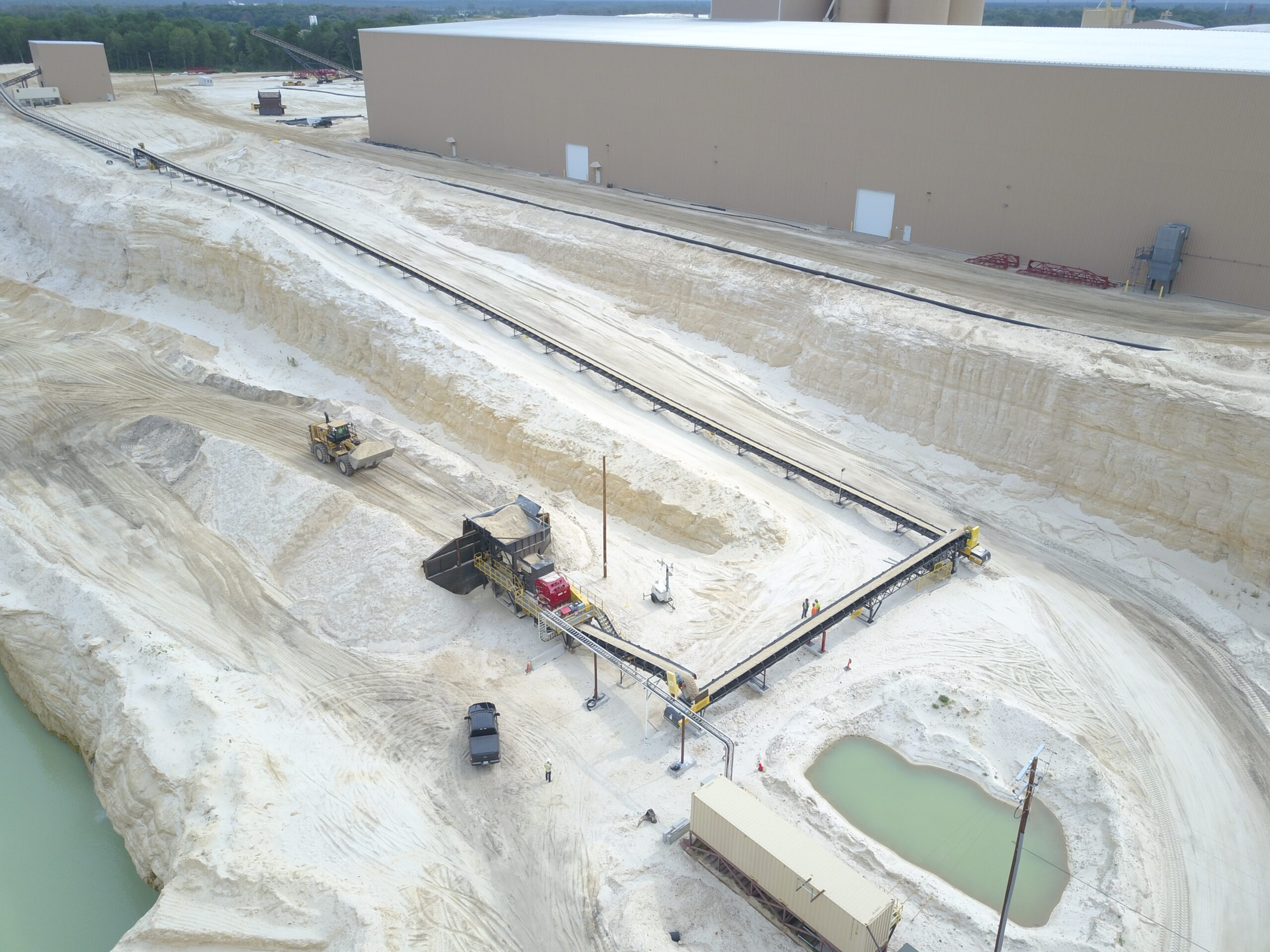
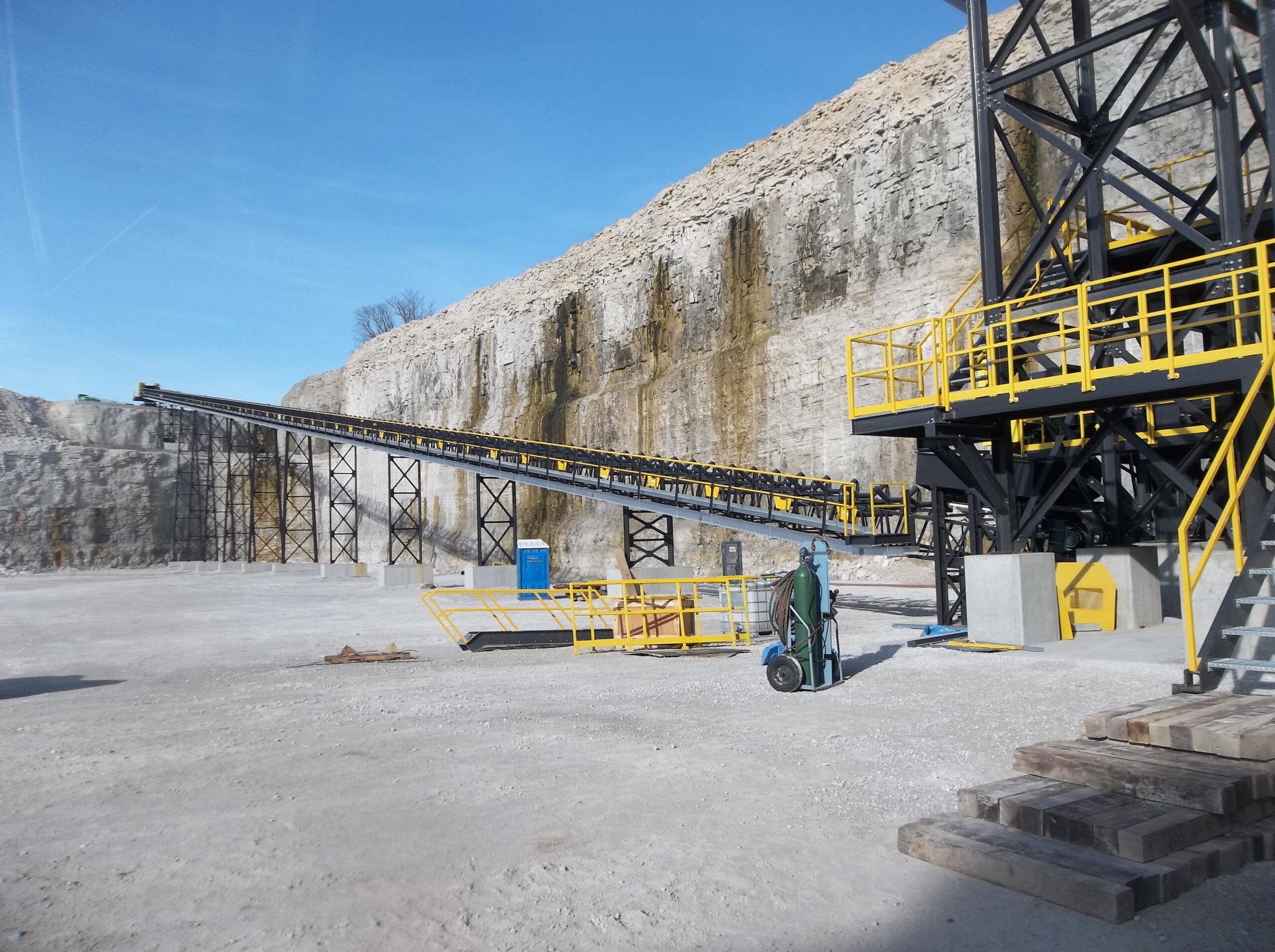
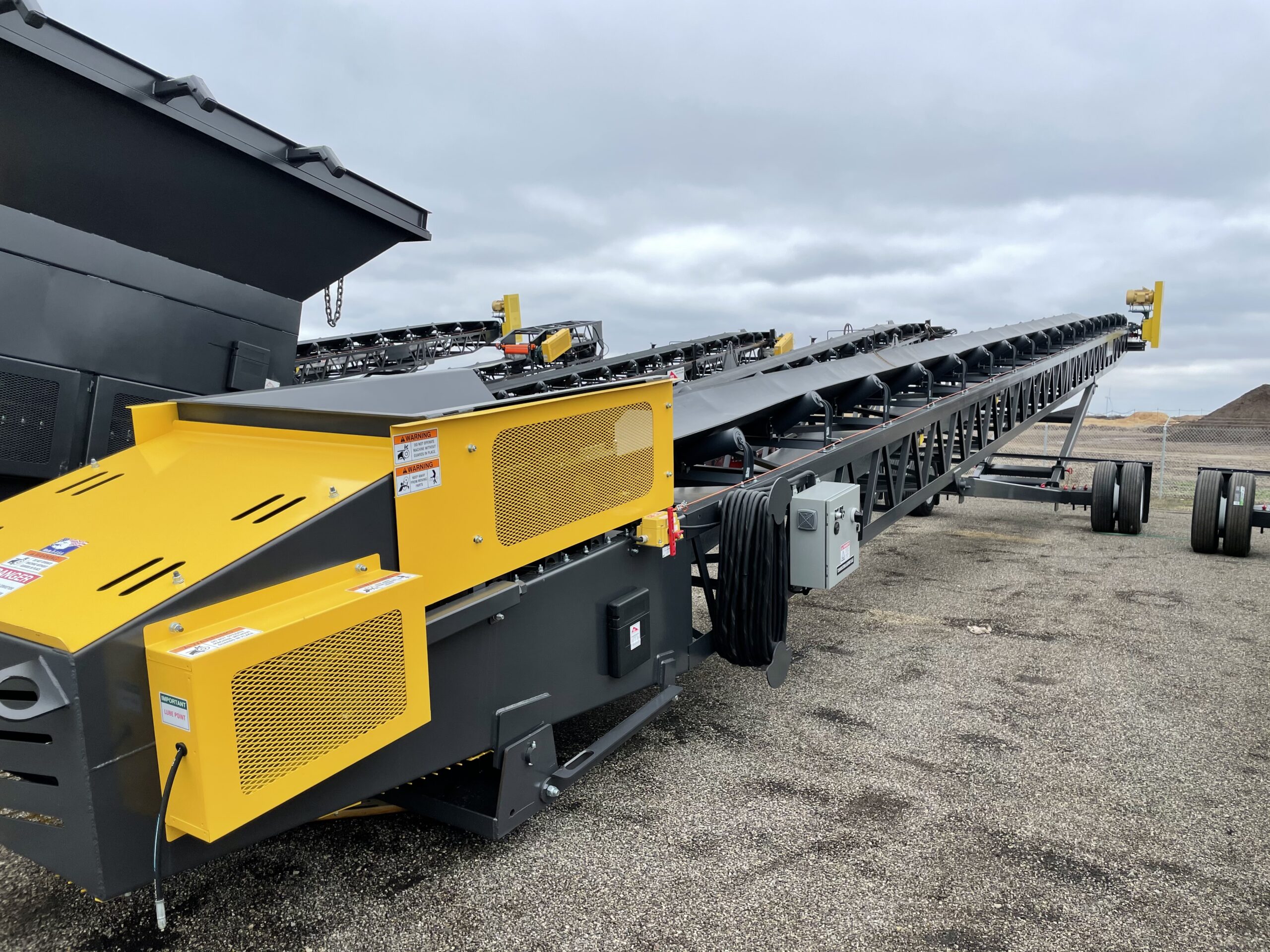
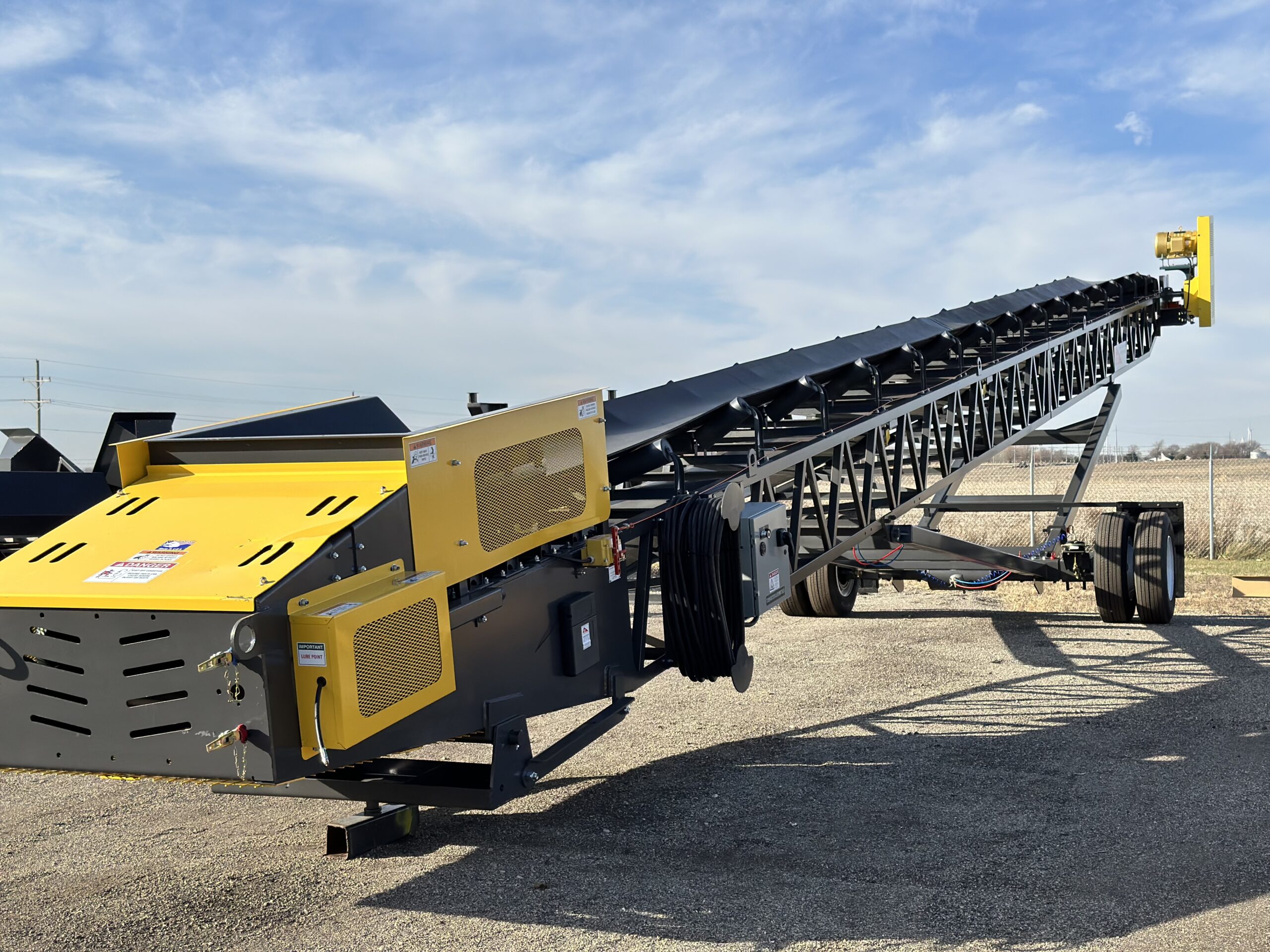
A transfer conveyor’s job is simple on paper and demanding in practice, moving material from one processing stage to the next without spillage, jams, or unplanned stops. TCI builds these in a range of lengths and widths so the unit matches the actual distance and volume between stages rather than forcing a site to work around a standard size.
Where transfer conveyors typically get placed on an Illinois site:
- Between the primary crusher and the screening plant, keeping continuous flow instead of batch dumping
- Feeding secondary or tertiary crushers where material needs further sizing
- Connecting screening decks to stockpile conveyors on multi-product lines
- Bridging gaps created by site grade changes or existing structures that a straight-line layout can’t avoid
TRANSFER CONVEYORS
A transfer conveyor’s job is simple on paper and demanding in practice, moving material from one processing stage to the next without spillage, jams, or unplanned stops. TCI builds these in a range of lengths and widths so the unit matches the actual distance and volume between stages rather than forcing a site to work around a standard size.
Where transfer conveyors typically get placed on an Illinois site:
- Between the primary crusher and the screening plant, keeping continuous flow instead of batch dumping
- Feeding secondary or tertiary crushers where material needs further sizing
- Connecting screening decks to stockpile conveyors on multi-product lines
- Bridging gaps created by site grade changes or existing structures that a straight-line layout can’t avoid
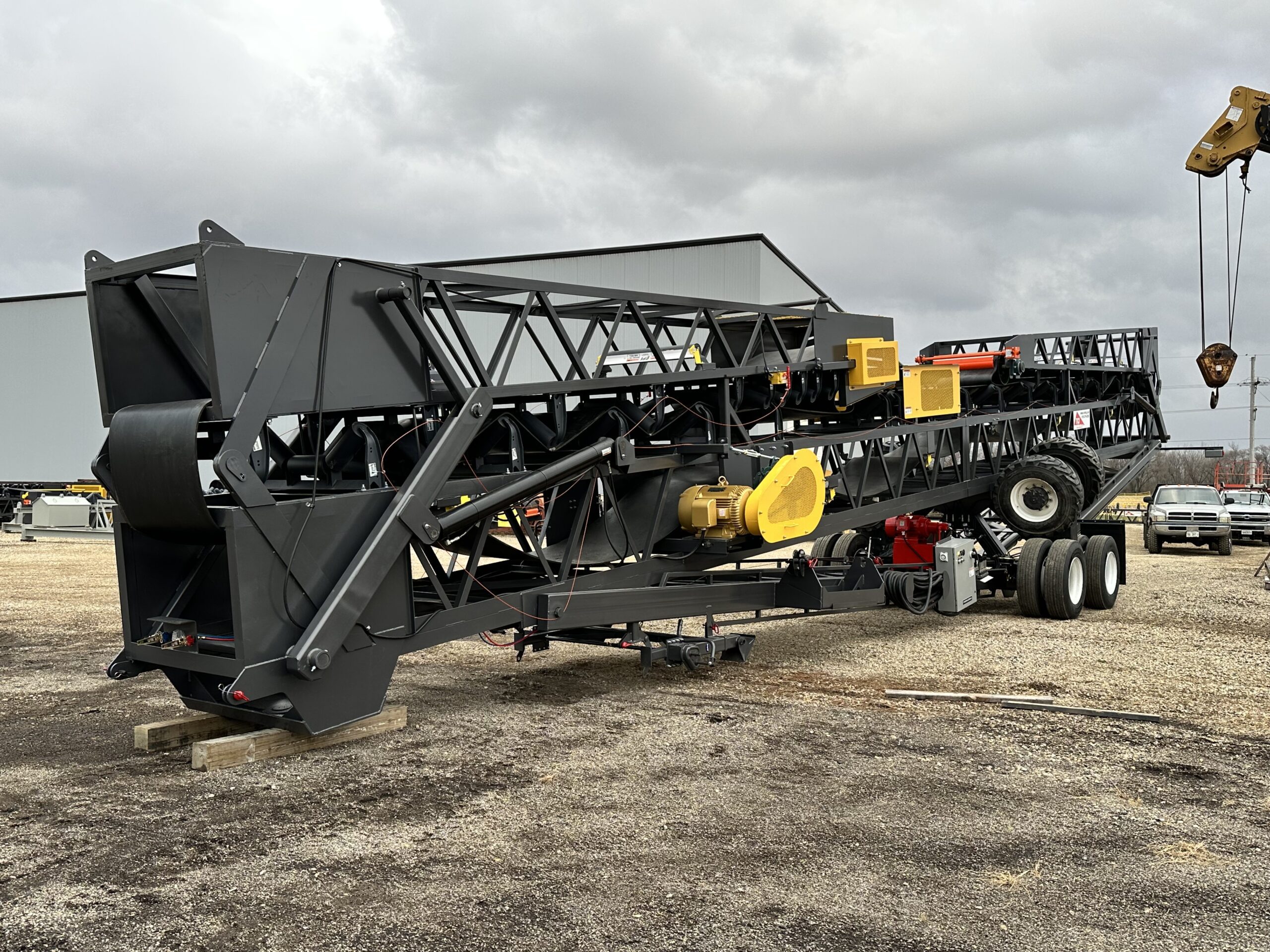
STACKABLE CONVEYORS
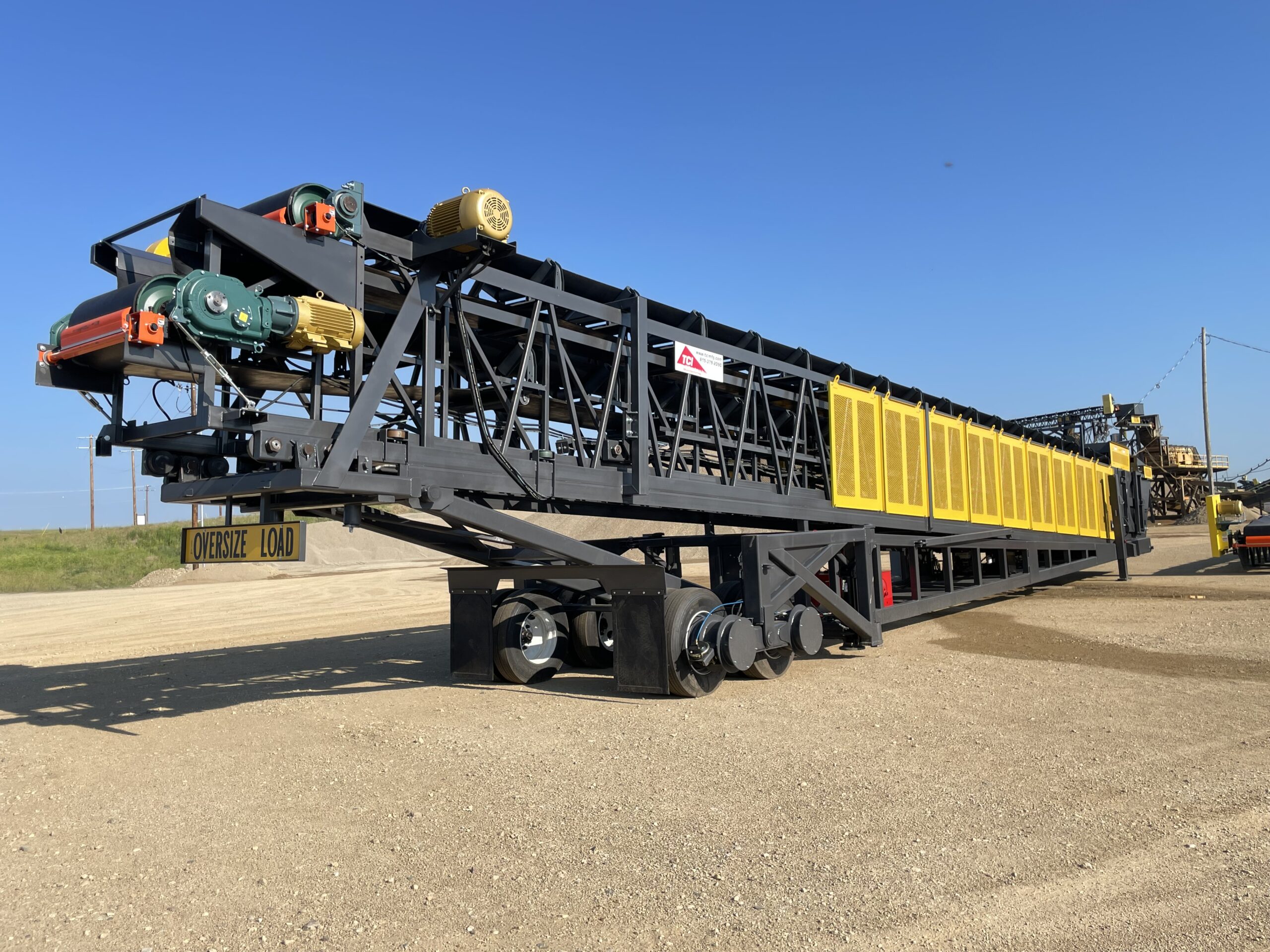
TCI’s “Piggyback” and Triple Stacked conveyors solve a specific problem of needing more stockpile capacity without adding more ground footprint. These aggregate conveyor systems for Illinois operators reach up to 160 feet on a single Piggyback load, and a Triple Stacked setup extends that to 240 feet, letting a site build height and volume into a stockpile instead of spreading it across more acreage.
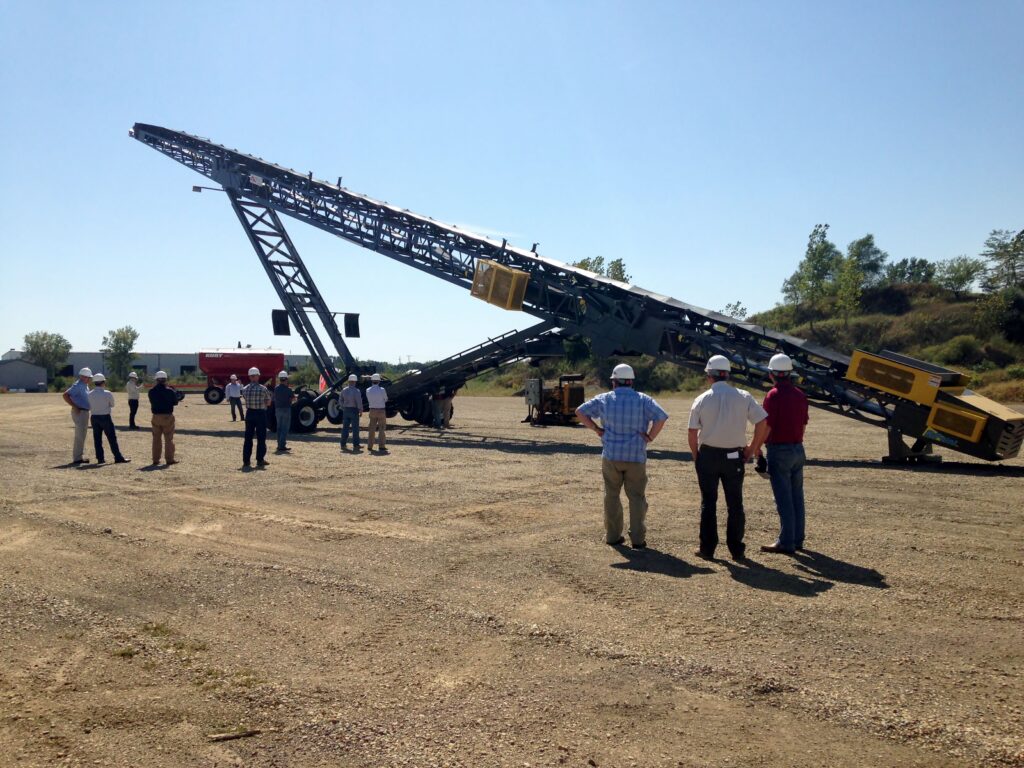
TELESCOPING CONVEYORS
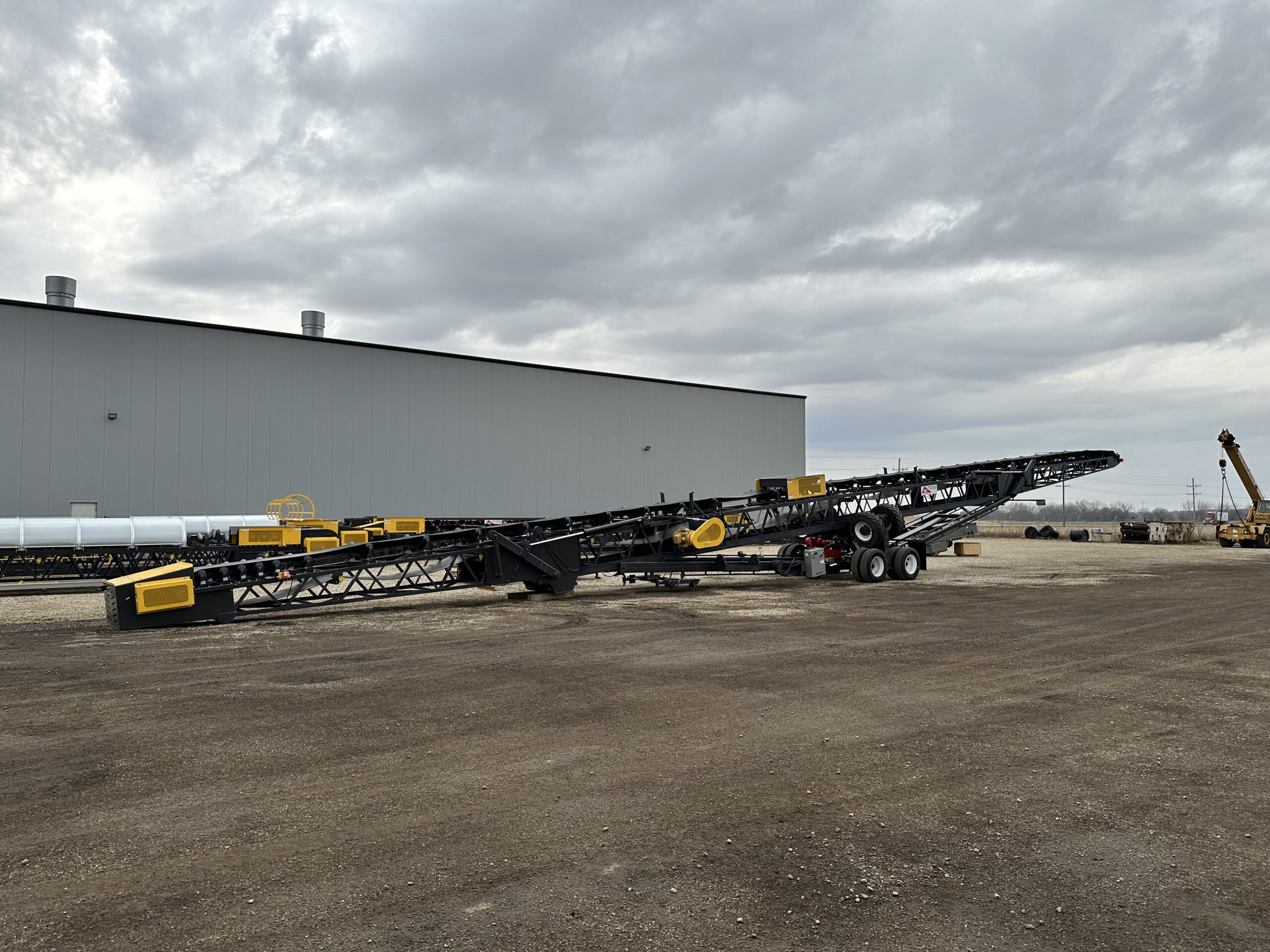
Telescoping conveyors extend and retract, which lets an operator build a taller, tighter stockpile while controlling how material lands instead of letting it free-fall and separate by particle size. That segregation control matters for products that need consistent gradation from the top of the pile to the bottom.
Practical advantages on space-limited Illinois sites:
- Retracts for transport or storage without needing a separate trailer or disassembly
- Reduces the stockpile footprint compared to a fixed-length conveyor built for maximum reach
- Speeds up redeployment when a site needs to reposition between different stockpile zones
- Cuts down on the double-handling that comes with rebuilding a pile that’s segregated by drop height
TELESCOPING CONVEYORS
Telescoping conveyors extend and retract, which lets an operator build a taller, tighter stockpile while controlling how material lands instead of letting it free-fall and separate by particle size. That segregation control matters for products that need consistent gradation from the top of the pile to the bottom.
Practical advantages on space-limited Illinois sites:
- Retracts for transport or storage without needing a separate trailer or disassembly
- Reduces the stockpile footprint compared to a fixed-length conveyor built for maximum reach
- Speeds up redeployment when a site needs to reposition between different stockpile zones
- Cuts down on the double-handling that comes with rebuilding a pile that’s segregated by drop height
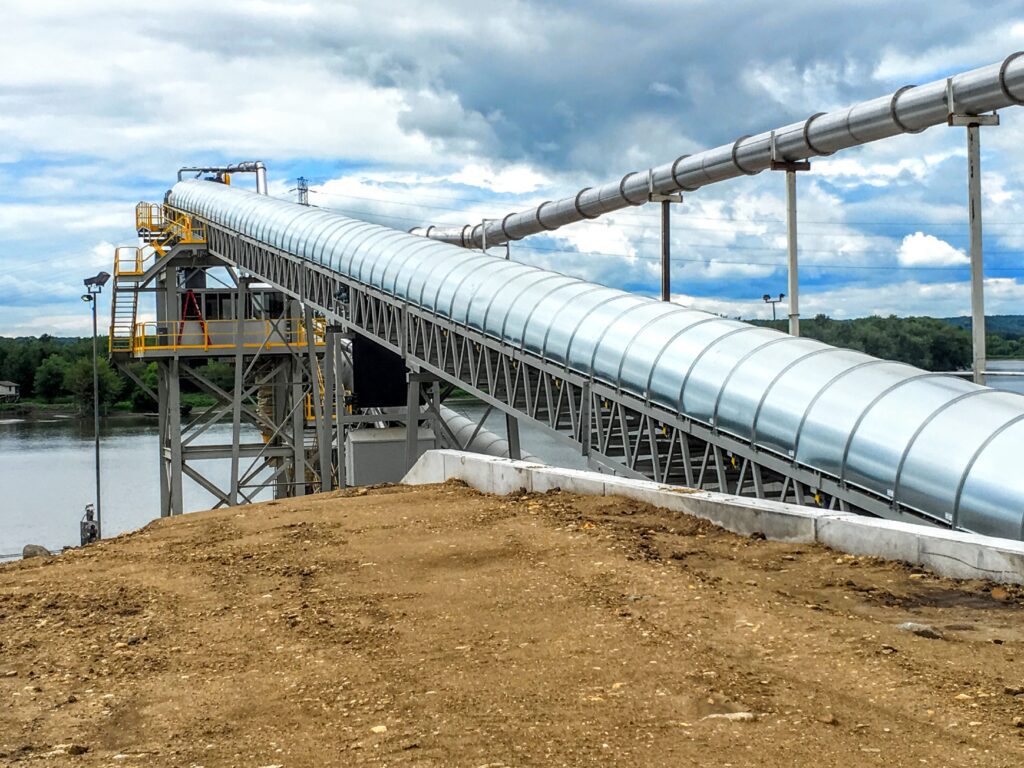
FLOATING CONVEYORS
Not every Illinois aggregate operation runs entirely on dry ground. Sites with ponds, settling basins, or river-adjacent processing need a conveyor that operates on water rather than a fixed structure, and TCI’s floating conveyors are built specifically for that transfer scenario, where a standard ground-mounted unit simply isn’t an option.
BARGE LOADING CONVEYORS
TCI’s Barge Load-Out Conveyors are built for one job, moving high volumes of material onto a barge as fast as the vessel can take it. These systems handle roughly 17 tons every minute and a half, working out to a capacity of up to 1,400 tons per hour, and serve both the aggregate and grain industries.
Why barge loading matters for Illinois producers specifically:
- Illinois sits along major inland waterways, including the Illinois and Mississippi Rivers, that many aggregate and grain operations already use for bulk shipping
- Barge transport moves significantly more tonnage per trip than truck transport, cutting the number of loads needed to move the same volume
- A dedicated barge loading conveyor reduces the truck traffic and loading dock congestion that comes with truck-only logistics
- Faster load-out times mean less vessel idle time at the dock, which matters when barge scheduling is tight
BARGE LOADING CONVEYORS
TCI’s Barge Load-Out Conveyors are built for one job, moving high volumes of material onto a barge as fast as the vessel can take it. These systems handle roughly 17 tons every minute and a half, working out to a capacity of up to 1,400 tons per hour, and serve both the aggregate and grain industries.
Why barge loading matters for Illinois producers specifically:
- Illinois sits along major inland waterways, including the Illinois and Mississippi Rivers, that many aggregate and grain operations already use for bulk shipping
- Barge transport moves significantly more tonnage per trip than truck transport, cutting the number of loads needed to move the same volume
- A dedicated barge loading conveyor reduces the truck traffic and loading dock congestion that comes with truck-only logistics
- Faster load-out times mean less vessel idle time at the dock, which matters when barge scheduling is tight
TRIPPER CONVEYORS
A tripper conveyor discharges material at a point that moves along the length of the belt rather than dumping everything from one fixed spot. That gives an operator control over how a stockpile forms across a wider area, instead of building one tall, narrow pile from a single discharge point.
MAST-TYPE STACKERS
TCI’s mast-type stackers use A-frame supports that can be built to virtually any height a site specifies, rather than a standard fixed elevation.
How that customization plays out in day-to-day use:
- Taller mast configurations increase stockpile volume without expanding the pile’s base footprint
- Height can be matched to a specific product’s angle of repose, reducing wasted stockpile space
- Custom height specs mean the equipment is built around the site’s actual clearance and volume needs rather than a catalog default
- Works well for operations consolidating multiple smaller piles into fewer, larger ones to free up yard space
MAST-TYPE STACKERS
TCI’s mast-type stackers use A-frame supports that can be built to virtually any height a site specifies, rather than a standard fixed elevation.
How that customization plays out in day-to-day use:
- Taller mast configurations increase stockpile volume without expanding the pile’s base footprint
- Height can be matched to a specific product’s angle of repose, reducing wasted stockpile space
- Custom height specs mean the equipment is built around the site’s actual clearance and volume needs rather than a catalog default
- Works well for operations consolidating multiple smaller piles into fewer, larger ones to free up yard space
SELF-CONTAINED CONVEYORS
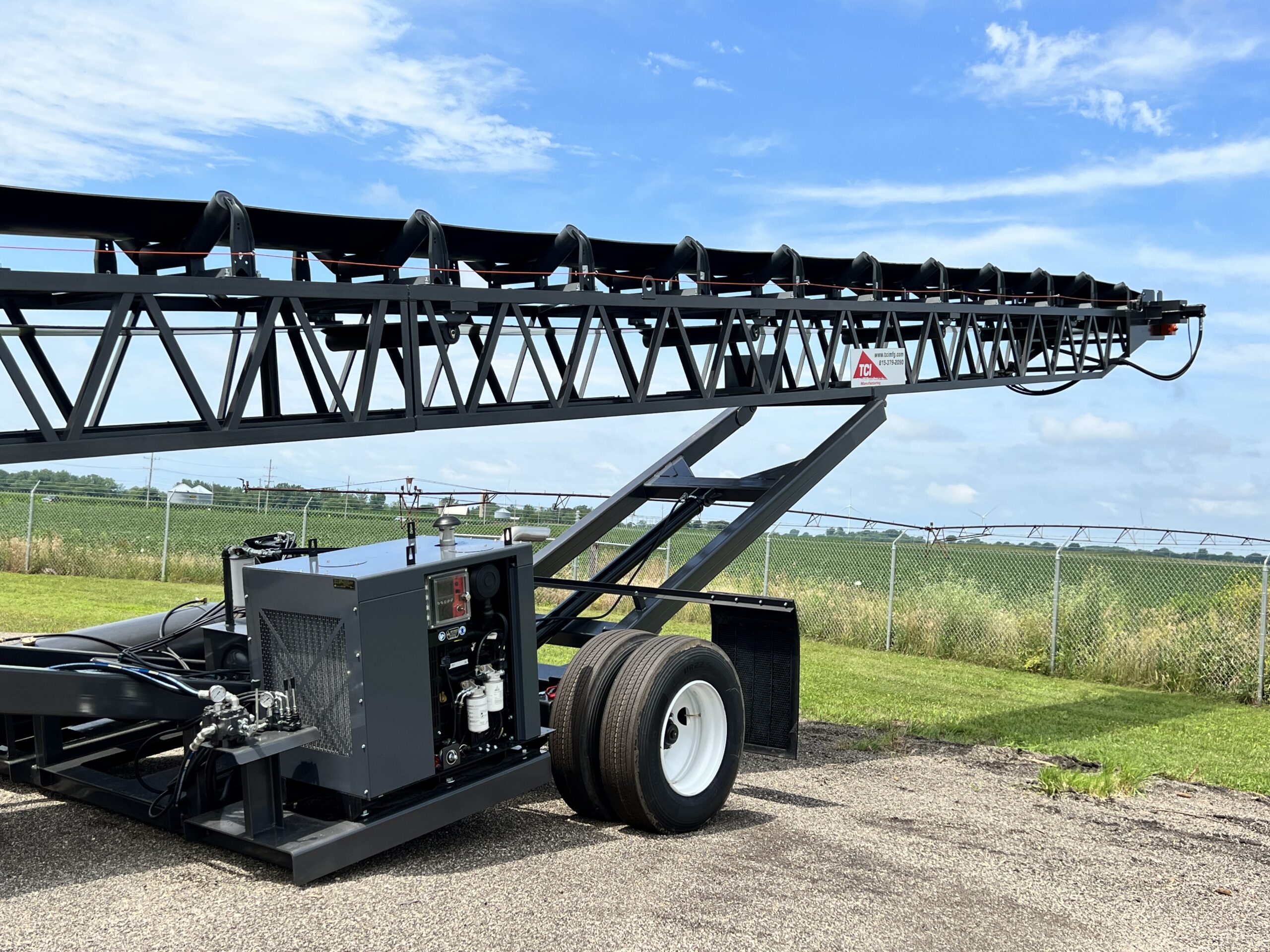
TCI’s self-contained diesel hydraulic conveyors run without a dedicated electrical hookup, which solves a real problem on sites where power access is limited, temporary, or not yet installed. Remote control discharge options also mean an operator can adjust or relocate the unit without needing to be positioned at the equipment itself.
Questions? Contact Us
Contact TCI Manufacturing to plan the right aggregate conveyor systems for your Illinois site, whether you’re starting a new build or replacing a line that isn’t keeping up.
CONVEYING EQUIPMENT GALLERY